
Nuclear Energy is Fine
Alas, this blog post is written, after I came upon this:
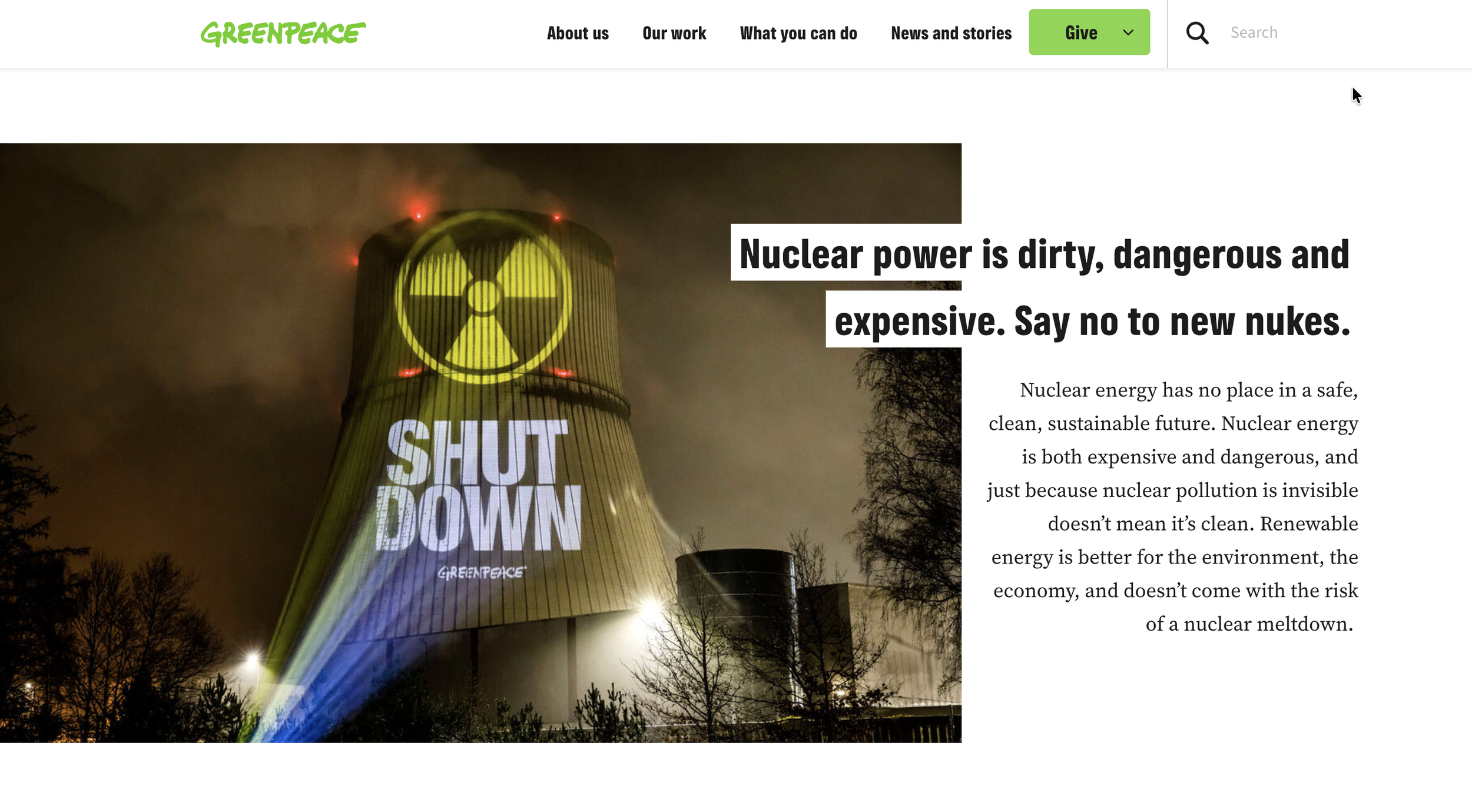
My opinion is:
Nuclear energy is safe, clean and efficient. Simply denying the benefits of nuclear energy because it’s “dangerous” is pure stupidity. No energy sources are perfect. Solving climate issues require the use of different sustainable low-carbon energy sources. Relying only on renewable energy sources is not enough.
As someone in the field of nuclear physics, I am inevitably biased. However, I believe that the majority of the fear from the public comes from the lack of understanding on the subject matter. We live in a world exquisitely dependent on science and technology, in which hardly anyone knows anything about science or technology. Evidently, a topic so broad requires a book of its own, covering all aspects of the issue is not possible in a single article. This piece contains only superficial discussions.
What is this "“Nuclear” stuff?
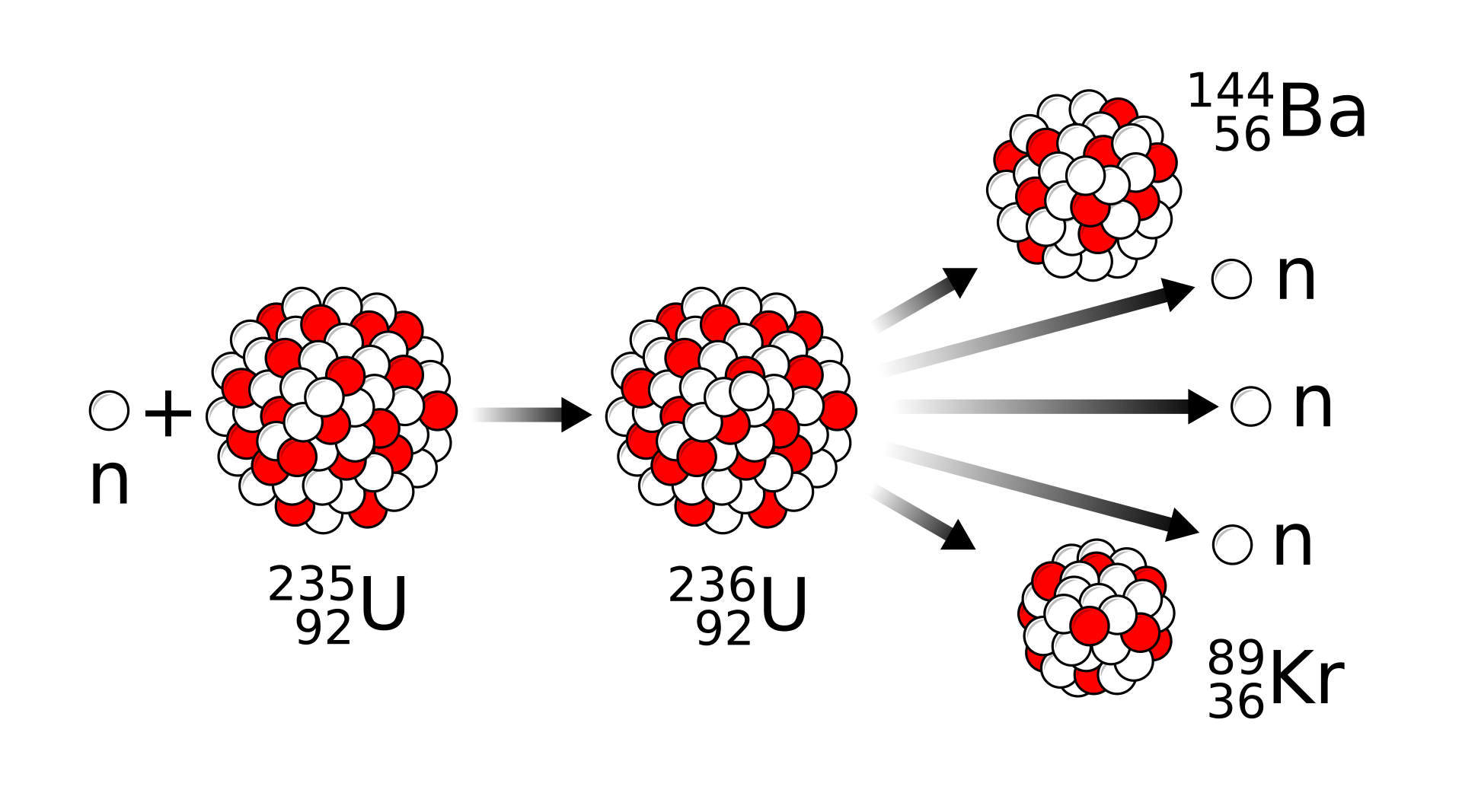
Nuclear fission of Uranium 235 [Image source: Wikipedia]
When the media mentions “nuclear energy”, they most often refer to the specific subset of nuclear reactions — “Fission”. Nuclear fission, discovered in 1938, is a type of nuclear reaction in which an the nucleus of an atom splits into two or more lighter nuclei. Fission releases massive amounts of energy compared to chemical reactions such as burning a piece of paper. This energy comes from the slight differences in mass before and after the nuclear reaction and can be calculated from Einstein’s energy-mass formula: E = Mc², where c is the speed of light (300000000 m/s). The (squared) value of c ensures that even the tiny mass difference would result in significant energy gain. This is the why nuclear energy is efficient.
To illustrate, it is best to elude to an example for some back-of-the-envelope estimates. For 1kg of Uranium fuel, the total energy is around 80 terajoules (80,000,000,000,000 joules). If one were to burn 1kg of coal, they get 15 megajoules (15,000,000 joules). The ratio is roughly 5,000,000 : 1. Put it in plain words: fission releases a few million times more energy per kilogram than chemical burning.
Nuclear Reactors
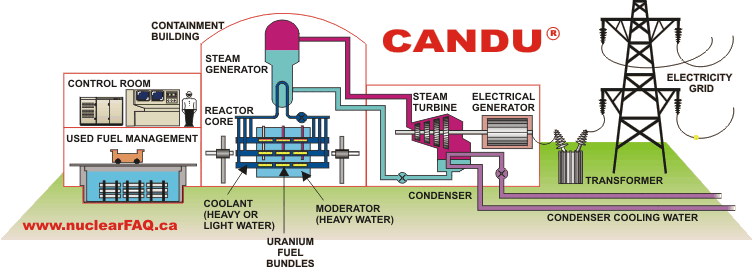
Schematics of the Canadian designed CANDU reactor. The reactor utilizes heavy water (D2O) as moderator and coolant. It uses natural Uranium(U-238) as fuel to eliminate the need for the expensive Uranium enrichment process required by other types of reactors. Generally considered one of the safest designs.
Every energy source is merely a different way of boiling water, nuclear reactors are no different. A nuclear reactor is where controlled nuclear fission takes place. There are a number of different designs of nuclear reactors but they all share some commonalities. The most important components are:
Fuel: usually U-235
Moderator: usually water or graphite to slow down the neutrons to increase fission rates.
Control Rods: neutron absorbers such as boron or cadmium, they are inserted or removed from the reactor core to regulate the reaction.
Coolant: Usually water, takes away the heat from the core.
The reactor core is a well-choreographed neutron dance. When an U-235 nucleus absorbs a neutron, it undergoes fission and release energy, more neutrons and some gamma radiation. The energy appears mostly as kinetic energy of the lighter fission fragments. The creation of more neurons enables the chain reaction, which is kept controlled for steady power outputs. The coolant absorbs the heat, which is used to boil water (aha!) to produce steam, which turns a turbine and produces electricity.
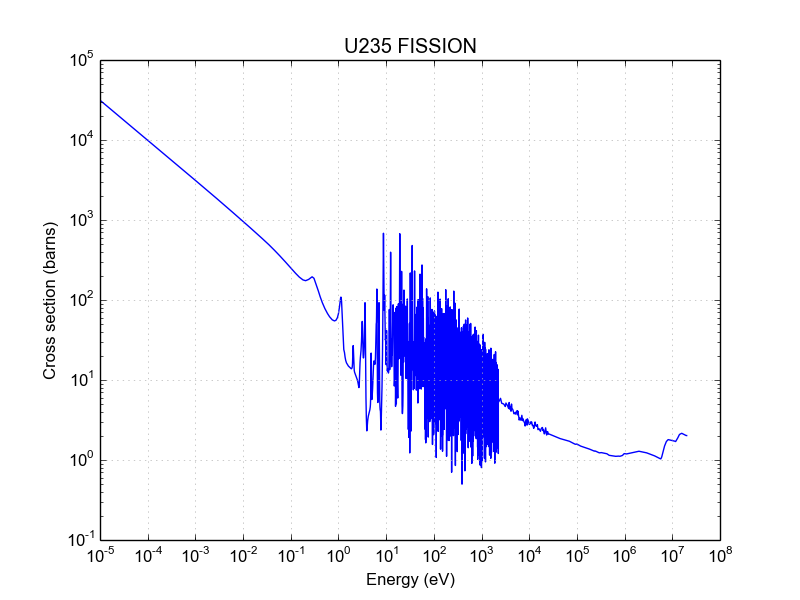
For the nerdy readers. A plot of the fission cross-section of U-235. This is why we need moderators to slow dow neutrons — thermal neutrons have a much higher probability of inducing fission than high energy neutrons. Slowing those neutrons down increases reactivity [1]. What is going on in the middle? Those come from the resonant states of the immediate compound nucleus U-236.
World Energy Sources: Current State
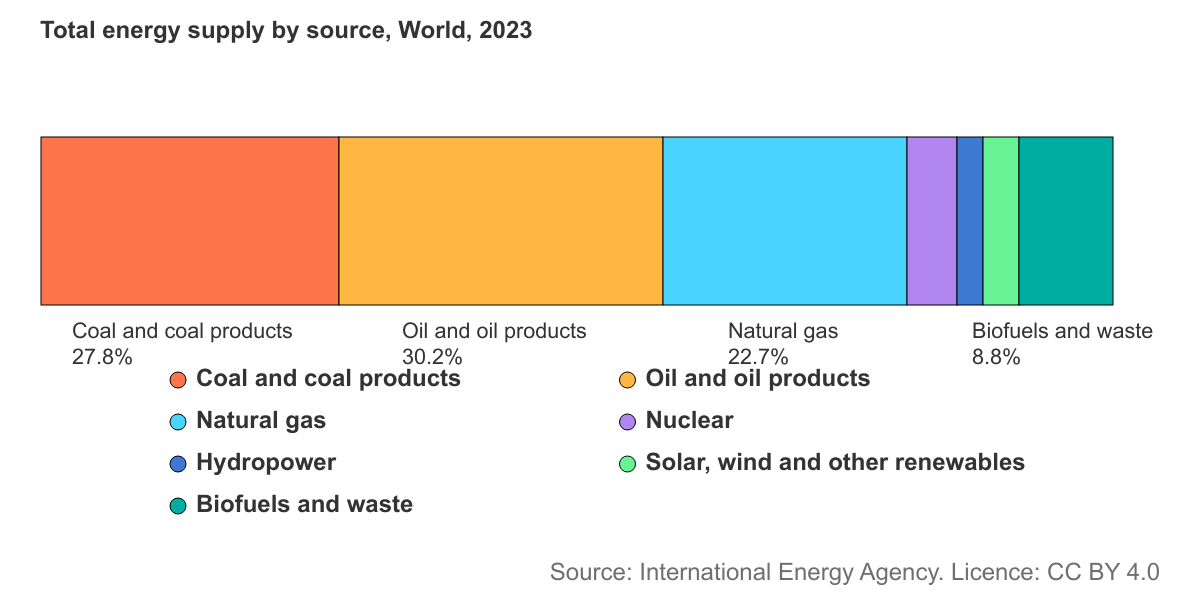
Slowing the rapid climate change requires the world to reduce greenhouse gas emission to net 0 by 2050[2]. As of 2023, more than 80.7% of the world’s primary energy comes from fossil fuels and only 4.7% comes from nuclear[3]. We heavily rely on coal, oil and gas which means transitioning away from them is difficult. Eliminating all forms of fossil fuel and resorting to only renewable energies is not feasible unless one intends to throw humanity back to the stone age. Alternatively, electrify different industry sectors is the most pragmatic solution. Switching from fossil fuel to electricity needs to be mandatory for industries[4].
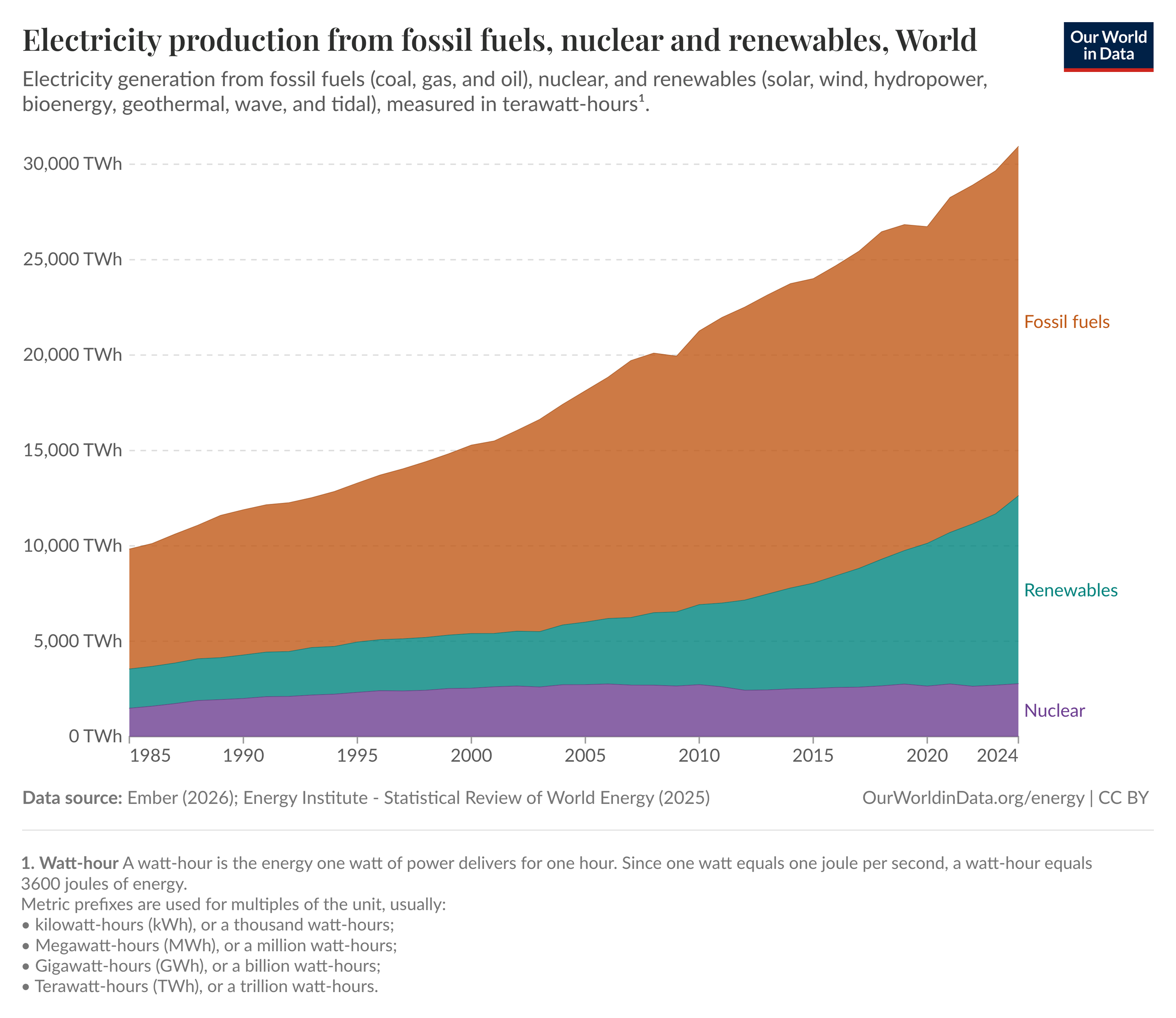
Switching to electricity is a viable solution because we are able to generate it with low emission technologies such as solar, wind, hydro and nuclear[5]. However, currently the majority of the world’s electricity is generated by burning fossil fuels[6]. Driving an electric car is not going to save the planet if one charges it with electricity generated by a coal power-plant.
To make matters worse, the increasing population and now, the construction of massive AI data centres, has significantly increased the world’s electricity usage[7]. The world is installing renewables at record speeds but our usage of fossil fuel keeps rising each year. Renewables have not been able to catch up with the demand for new electricity and emissions from electricity will continue to rise world wide.
Nuclear Energy: Trends
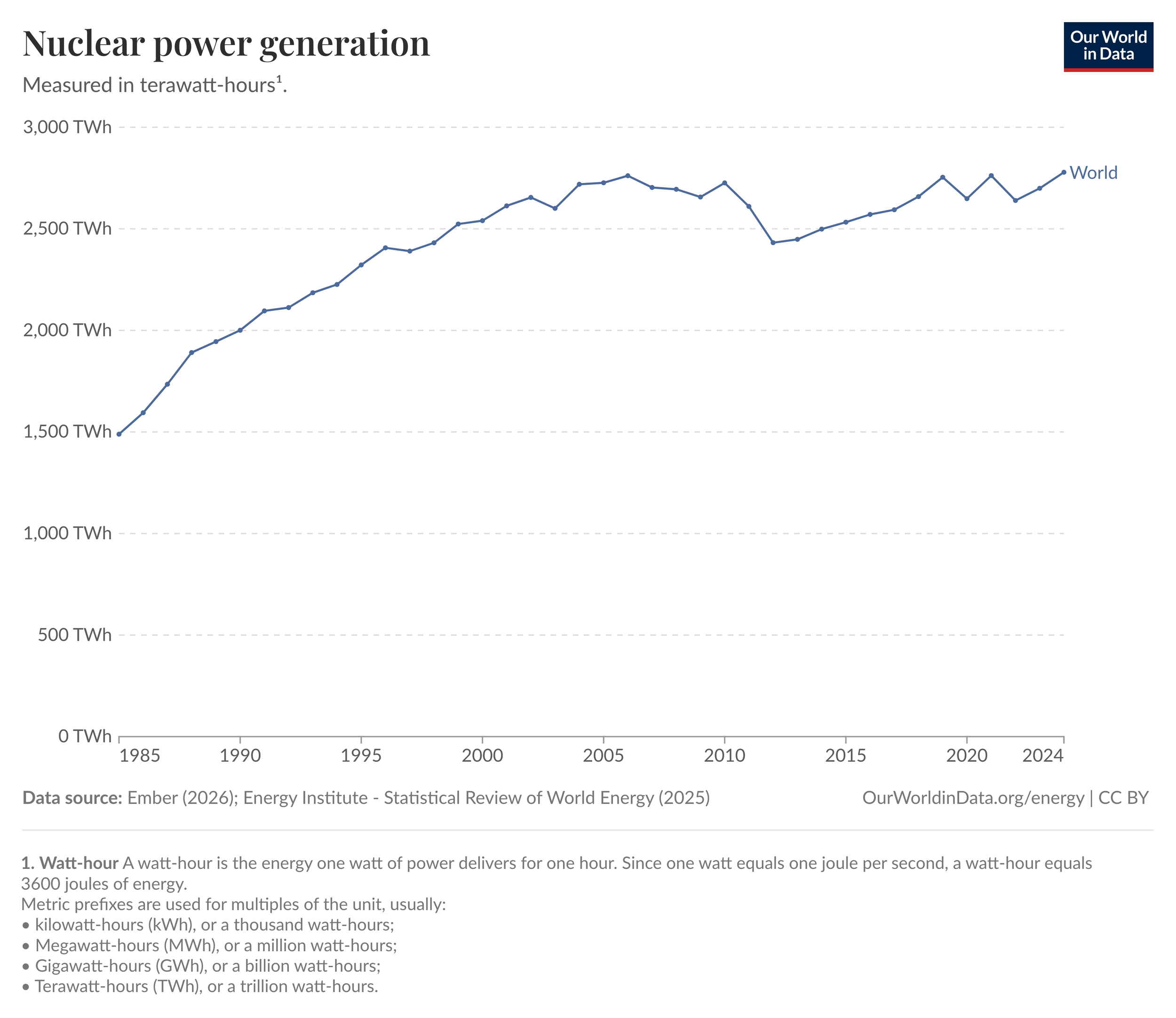
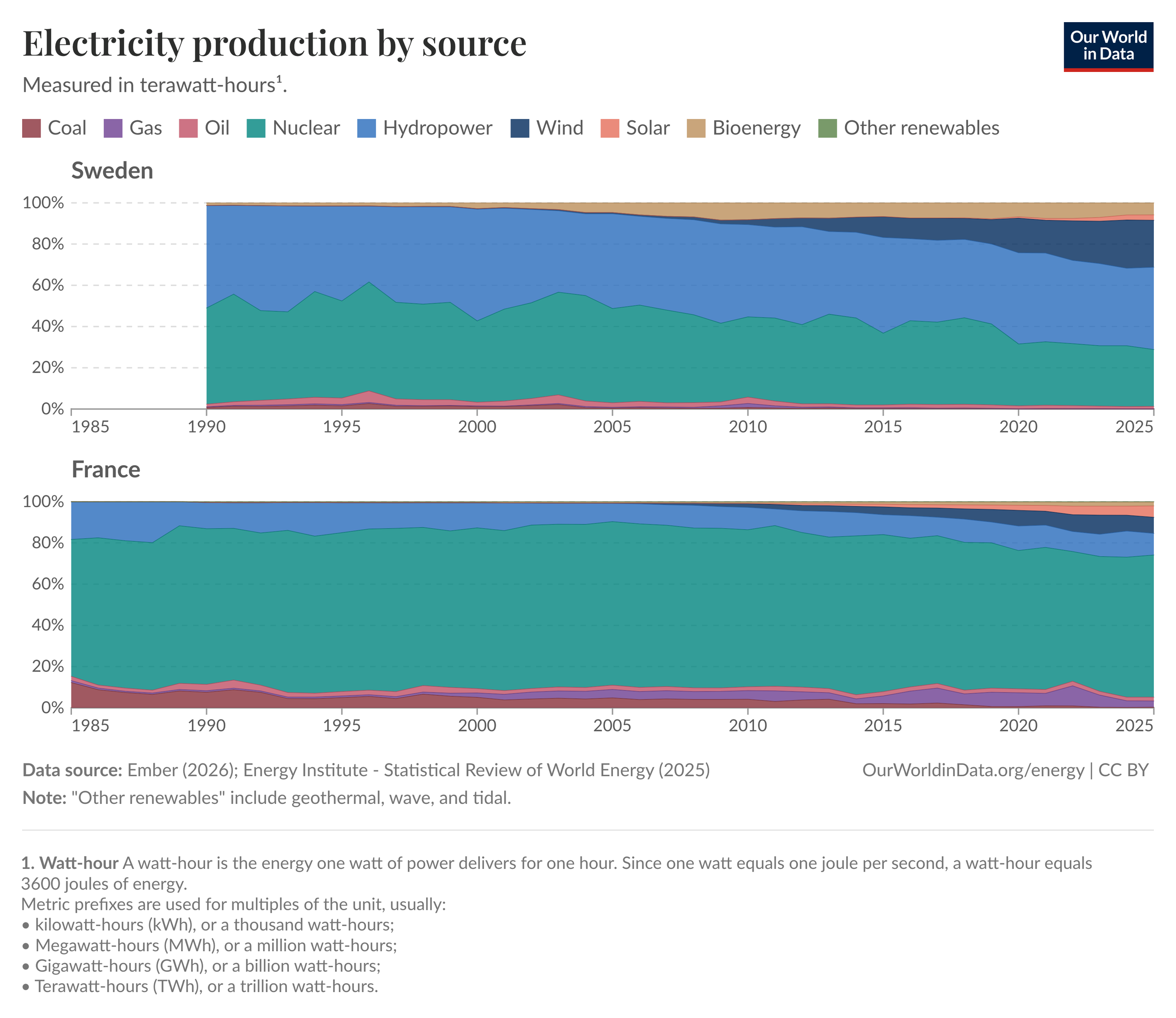
One can easily spot the interesting fact in the graph above: electricity from nuclear energy has barely changed over the past 40 years. Even more so, countries such as Germany and Japan are actively decommissioning their current nuclear power plants while putting more coal plants on the grid to keep the energy output constant. This is rather bizarre if we look at the countries with the most low-carbon electricity in the world: they get their electricity from two main sources: nuclear and hydro.
Notable examples are France and Sweden. In France, only around 10% electricity comes from fossil fuel, with 67% comes from nuclear and 23% from renewables. In Sweden, roughly 30% comes from nuclear and 45% from hydro[9].
Nuclear energy has proven to work at scale.
So why is it not gaining popularity?
Why are many environmental organizations strongly against it?
Safety
The main reasons people oppose nuclear energy is safety. A survey has shown that 79% of population is concerned about the safety regarding nuclear energy[10].
On the home page of Greenpeace’s website they claim: “Nuclear reactors are inherently unsafe. If the industry’s current track record is any indication, we can expect a major meltdown about once per decade. As a result, millions of people who live near reactors are at risk.”
I will first discuss how this is a blatant piece of misinformation. Then I will compare the danger between nuclear energy and other forms of energy.
The Chernobyl accident is the biggest nuclear accident in human history. One can read up on the details online and I intend to write a separate article discussing exactly how it happened. In short, the reason for such accident was purely a result of an authoritarian government and a flawed design in the RBMK reactor control rods [11]. Residents near the power plant were not evacuated after the accident because the Soviet government prioritized national image over the safety of citizens. As a result, 31 people died directly in the accident[12]. The estimates of long-term death estimates vary drastically depending on the organizations. The European Green Party projects up to 40,000 premature deaths by the year of 2065[13] while the World Health Organization(WHO) estimates this number to be around 4,000[14]. A moderate estimate was made by Cardis et al., stating the number to be around 14,000[15]. In all three reports, authors report pointed out the large uncertainties.
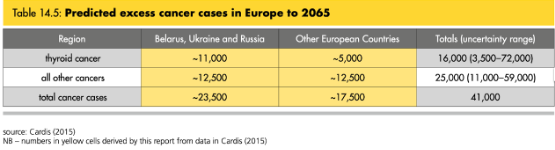
Death estimates by Cardis et al, notice the large uncertainties in these studies
The direct cause of the Fukushima accident was the tsunami flooding critical electrical and cooling infrastructure. The official statements have reported 0 fatalities due to radiation[16]. The United Nations Scientific Committee on the Effects of Atomic Radiation reported that there were no acute radiation health effects in the public from the event and indiscernible increases in radiation-related health effects are not expected at the population level given estimated doses[17].
How does the number of fatalities of nuclear energy compare to other types if energies?
First, I looked into the world of renewable energies since I live in British Columbia and around 90% of the electricity is generated from hydro.
In total, hydro has the most fatalities in terms of accidents with a few hundreds of thousands fatalities in the last 50 years[18]. I could not find a complete report on all hydropower dam accidents. It seems that hydropower accidents are not very well-documented.
Among all the accidents that were recorded, the 1975 Banqiao hydroelectric dam failure in China is the most serious. The event resembles the Chernobyl accident for that it was also caused by poor design and a government that only cares about its international appearances. A typhoon triggered flooding and destroyed the dam and a number of subsequent smaller dams. A flood of over 15 billion cubic metre of water wiped out thousands of square kilometres of countryside[19]. The total death toll was estimated to be between 85,000 and 240,000[20].
Simply looking at the numbers, why is it that the dams we build are not considered more dangerous than nuclear power plants?
The statistics become extreme when we include the fossil fuel industry in the discussion. When fossil fuels are burned in a power plant or combusted inside a car engine, ozone, sulfur dioxide, carbon monoxide and nitrogen dioxide are pumped into the atmosphere. Inhaling said chemicals disrupts lung function, aggravates chronic conditions such as asthma and bronchitis thus causing respiratory and cardiovascular diseases[21]. Fossil fuel related air pollution is the number one cause of environmental related deaths in the world[22]. To quote some real data, air pollution accounts for[23]:
29% of all deaths and disease from lung cancer
17% of all deaths and disease from acute lower respiratory infection
24% of all deaths from stroke
25% of all deaths and disease from ischaemic heart disease
43% of all deaths and disease from chronic obstructive pulmonary disease
In total, it is estimated that air pollution is responsible for 4 million deaths per year[23].
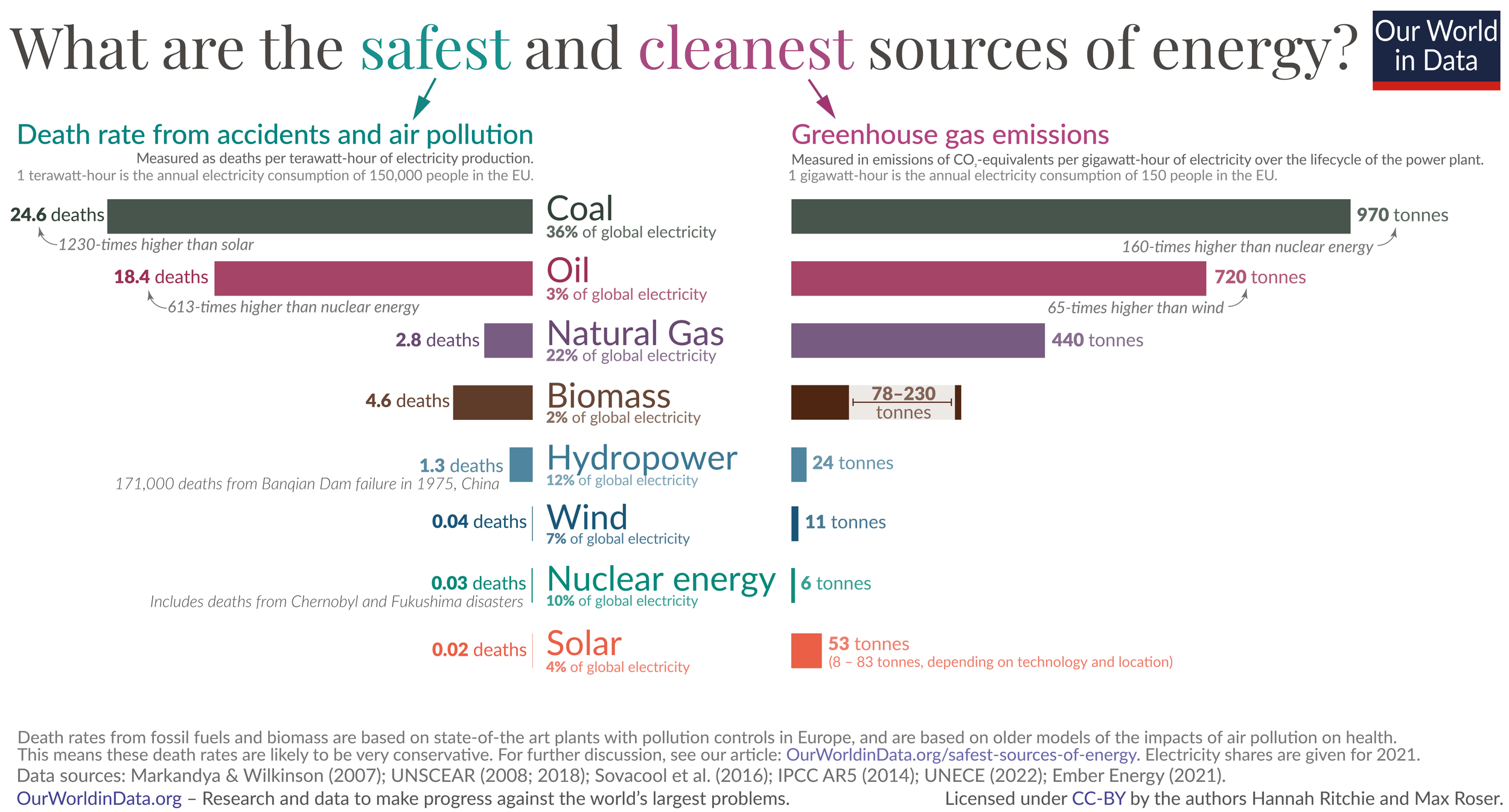
Graph shows the death rate per energy (terawatt-hour) consumed. Nuclear energy remains one of the safest energy source after taking Chernobyl and Fukushima into account.
Some might still not be satisfied with the data and insist that nuclear power plants are dangerous because they can become a nuclear bomb and explode at any time.
The reactor core in Chernobyl exploded but only blew up parts of the top of the building. Nuclear-bomb-type explosions are not possible inside a reactor because there is simply no enough concentrated Uranium fuel. A typical nuclear power plant fuel rod contains around 3% enriched U-235[24]. To make a bomb, one would need more than 90% (I didn’t tell you that). The explosion that took place at Chernobyl reactor 4 was a chemical explosion resulting from the overheating fuel rods. Not a nuclear one. I am all for nuclear disarmament but mixing the concept of a “reactor” with a “nuke” is a clear example of nuclear fear mongering.
In addition, contrary to the Chernobyl reactors, many nuclear reactors (especially ones in North America) use water as both a moderator and coolant. This means that a meltdown is physically impossible even if human error were to occur.
Waste & Pollution
Nuclear energy is one of the cleanest energies regarding carbon emission, creating 6 tonnes of CO2 per 1GWh of energy and barely any toxic gases[see graph above]. The biggest concerns from the public comes from the waste power plants produce[10]. Here I present detailed facts about nuclear wastes.
Like every kind of energy source, nuclear energy produces wastes. Nuclear wastes are classified by their radioactivity, here are the levels and percentages of each type:
Low level waste — 90%
Intermediate-level waste — 7%
High level waste — 3%
We can handle 97% of the wastes fairly well, the trouble really only starts with the remaining 3% (Details about these wastes would be discussed in a separate article). In total there had been 370,000 tonnes worldwide by 2013 and 1/3 of which had been processed. 12,000 tonnes of more high level waste is added each year[25].
What do we do with all these wastes? Right after the fuels can no longer be used for fission, they are stored 12m under a pool so the short-lived isotopes can decay and reduce ionizing radiation. Once they are cooled, plutonium and uranium can be separated from the waste via a set of chemical reactions and could be reused. Next, they can be put into huge casks made of steel and concrete. They are buried hundreds of meters below the surface in a geologically stable location away from any underground water. There are still many hazards concerning long-term storage, one being the possibility of leaking radiation and its effects on the ecosystem. However, multiple studies have shown that if properly stored, no waste would leak into the surrounding environment[26]. Overall, we can be very confident that the deep geological repositories will remain safe for millions of years, despite some small uncertainties.
On the other hand, the wastes from fossil fuels are usually dumped into the surrounding environments. An 1GW coal plant produces approximately 7.34 million tonnes of CO2 and 336,000 tonnes of ash per year[27]. The amount of waste nuclear power plants produce pales in comparison.
Radiation
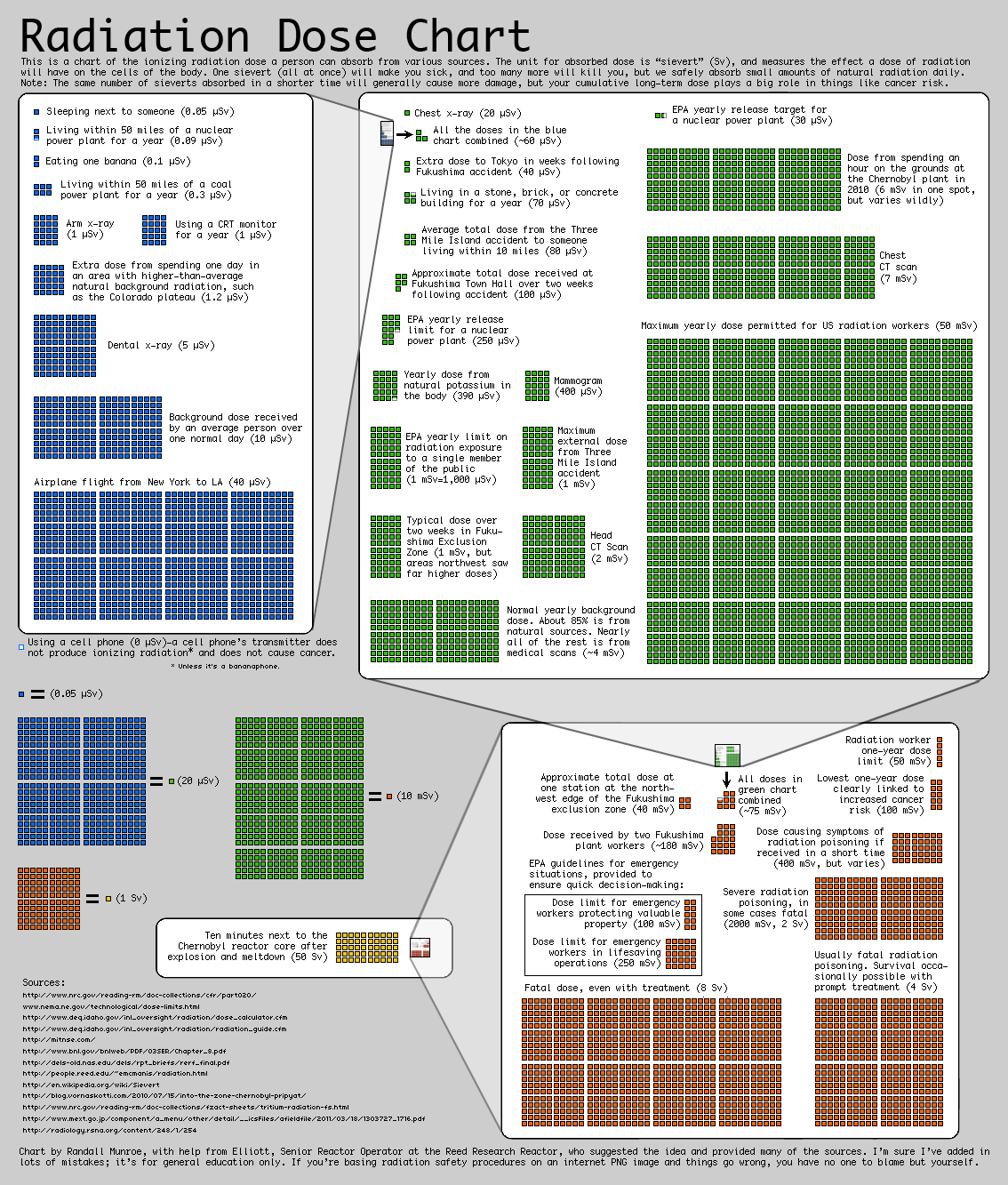
Another big concern is the radiation around the power plant. This one is a lot easier to explain because: there is nearly none relative to background.
Radiation is ubiquitous. Everything is radioactive in some shape or form because they are made of atoms. A banana is radioactive because of its high potassium concentration, the air is radioactive because of radon, one’s house is radioactive because of different elements in the concrete and rocks. Even living at a higher altitude result in a higher radiation dosage because there is less atmosphere to shield one from the cosmic rays. All of these radiation dosage we receive everyday is called background radiation. When talking about the amount of radiation one receives, it only makes sense to compare it to the amount of background radiation.
Living near a nuclear power plant gives only around 1% of the background radiation and is 1/3 of the radiation compared to if one lives near a coal plant. It is barely higher than the dosage one receives from sleeping next to another person, or eating a banana. This does becomes insignificant when compared to the dose from a flight or a CT scan, yet when was the time you hesitated to board a plane because of the added radiation?
Cost
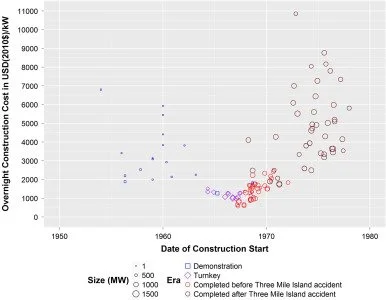
Image source: Historical construction costs of global nuclear power reactors, Jessica R.Lovering et al, 2016
This is a extremely complicated topic and requires a separate article. There exists a subfield in economics named “Nuclear Economics”. What is being presented here does not even scratch the surface of the topic.
Nuclear reactors are undoubtedly expensive to build. Due to the lack of investment and fear from the public, the majority of the nuclear reactors in the world run on technologies from 40 years ago. They are very costly to replace. In most western countries, building nuclear reactors has become expensive because of loss of know-how, policy changes and increased regulatory constraints[28].
In contrast, countries such as South Korea, China, India and Russian are able to build new nuclear reactors relatively quickly at a lower cost. In South Korea, the cost for building a nuclear reactor has gone down from 1970 to 2010[29].
Final Remarks
Warning: contains some strong personal opinions
To me, the cause for the underdevelopment of nuclear energy is never a technological one, but a sociological, political and psychological one. Comparing Nuclear energy to other types of energy is like comparing flying to driving a car. Flying is a significantly safer mode of transportation, yet we still instinctively think it’s safer to have our feet on the ground, unfazed by the millions that die in car crashes each year. Evolution gave us the ability to detect immediate dangers but we tend to not see past our instincts. Perhaps this is why statistics becomes counter-intuitive at times and perhaps this is why very few governments look beyond the length of time where the officials are actually in power.
I am puzzled by the attacks from environmental organizations towards nuclear energy. Nuclear is a source of clean energy. I wholeheartedly agree that eventually the world should run on renewable energy. However, the reality is that solar, wind and geothermal energies are intermittent and we currently do not have the storage capacity for all the electricity they produce. Nuclear energy is one of the best options if we want to make up for the lack of continuous energy output during the long transition to an 100% clean grid. Pro-nuclear energy is not against the environment.
We are on the same side.
I don’t buy arguments such as “We don’t have time to build them” Those who argue it takes a decade to build a nuclear power plant argued the same a decade ago. We would’ve had those power plants now if we were given a choice a decade ago. Even if we don’t build new plants, retro-fitting and upgrading current ones is the least we can do. Shutting down existing working power plant is beyond ludicrous.
Contrary to what the Greenpeace website suggests, nuclear energy is clean, safe, and efficient. If slowing down climate change is the goal, then we need all the help we can get, which means that nuclear power would have a critical role to play. Through talking to a number of different people outside the field of nuclear physics, I have come to realize that people have very little knowledge about the basic working principles of a nuclear power plant. Yet those are the ones who deem nuclear power plants extremely unsafe. For nuclear energy to gain popularity, public education has a long way to go. Nuclear energy certainly is not the solution to climate change. No one singular energy source is. Combining all low emission energy sources is what gives us a slight chance to slow down the course of climate change, provided our governments are able to see beyond the short-term benefits.
Unless…. Fusion?
References
N. Soppera, M. Bossant, E. Dupont, "JANIS 4: An Improved Version of the NEA Java-based Nuclear Data Information System", Nuclear Data Sheets, Volume 120, June 2014, Pages 294-296.
Global Warming of 1.5 ºC, Intergovernmental Panel on Climate Change, 2018
International Energy Agency. “World.” Accessed March 15, 2026. IEA. https://www.iea.org/world/energy-mix
Electrification 101, Resources for the Future, 2019
https://www.rff.org/publications/explainers/electrification-101/
Getting to Zero Carbon Emissions in the Electric Power Sector, 2018.
https://reader.elsevier.com/reader/sd/pii/S2542435118305622?
OWID, Share of electricity production from fossil fuels, 2019
https://ourworldindata.org/electricity-mix#fossil-fuels-what-share-of-electricity-comes-from-fossil-fuelstoken=FD639623ED78A3DC9589AA58BACC69D28701616B725BB2C528F393125D6B7826C3D40FF24F1433B4E4FD107E682F9A19
OWID, Electricity production from fossil fuels, nuclear and renewables, World, 2025
OWID, Electricity production from fossil fuels, nuclear and renewables, World, 2025
OWID, Electricity production from fossil fuels, nuclear and renewables, France, 2025
Radiant Energy Group. Public Attitudes toward Clean Energy (PACE) 2023 – Nuclear Energy. 2024.
Nuclear Energy Agency, Chernobyl: Assessment of Radiological and Health Impacts (2002), 2002 Update of Chernobyl: Ten Years On
Nuclear Energy Agency, Chernobyl: Assessment of Radiological and Health Impacts (2002), 2002 Update of Chernobyl: Ten Years On
Fairlie and Sumner, The Other Report On Chernobyl (TORCH), 2006
The Chernobyl Forum, Chernobyl’s Legacy: Health, Environmental and Socio-economic Impacts, 2005.
https://inis.iaea.org/collection/NCLCollectionStore/_Public/36/093/36093263.pdf?r=1
Cardis et al., Estimates of the cancer burden in Europe from radioactive fallout from the Chernobyl accident, 2006.
Yomiuri Shimbun, Daily Yomiuri Online, 2012.
United Nations Scientific Committee on the Effects of Atomic Radiation. Sources, Effects and Risks of Ionizing Radiation: UNSCEAR 2020/2021 Report. Volume II. Scientific Annex B: Levels and Effects of Radiation Exposure Due to the Accident at the Fukushima Daiichi Nuclear Power Station: Implications of Information Published since the UNSCEAR 2013 Report. New York: United Nations, 2022.
Sovacool B.K. et al., Balancing safety with sustainability: assessing the risk of accidents for modern low-carbon energy systems, 2016.
https://www.sciencedirect.com/science/article/abs/pii/S0959652615009877
Typhoon Nina–Banqiao dam failure, 2009.
https://www.britannica.com/event/Typhoon-Nina-Banqiao-dam-failure
Reflections on Banqiao, 2019.
https://www.thechemicalengineer.com/features/reflections-on-banqiao/
WHO, 2018.
https://www.who.int/en/news-room/fact-sheets/detail/ambient-(outdoor)-air-quality-and-health
WHO, Preventing disease through healthy environments, 2016.
https://apps.who.int/iris/bitstream/handle/10665/204585/9789241565196_eng.pdf?sequence=1
Ambient air pollution: Health impacts, WHO
U.S. Nuclear Regulatory Commission. (n.d.). Licensing of fuel enrichment and fabrication facilities. Retrieved March 15, 2026, from the NRC website.
Radioactive Waste - Myths and Realities, 2020
Deep Geological Repositories: A Safe And Secure Solution To Disposal Of Nuclear Wastes, 2000
U.S. Energy Information Administration FAQ on coal use per kWh; U.S. Energy Information Administration FAQ on CO₂ per kWh by fuel; EIA Electric Power Annual Table 7.3 on coal ash content; EPA Coal Combustion Residuals basics; EIA Coal and the Environment.
Economics of Nuclear Power, World Nuclear Association, 2020
https://www.world-nuclear.org/information-library/economic-aspects/economics-of-nuclear-power.aspx
Historical construction costs of global nuclear power reactors, Jessica R.Lovering et al, 2016
https://www.sciencedirect.com/science/article/pii/S0301421516300106